Why the best learning tool isn't always the most advanced one, and what schools are rethinking about phones, screens and AI.
November 4, 2026
Originally posted by Kenneth Schlenker on LinkedIn.
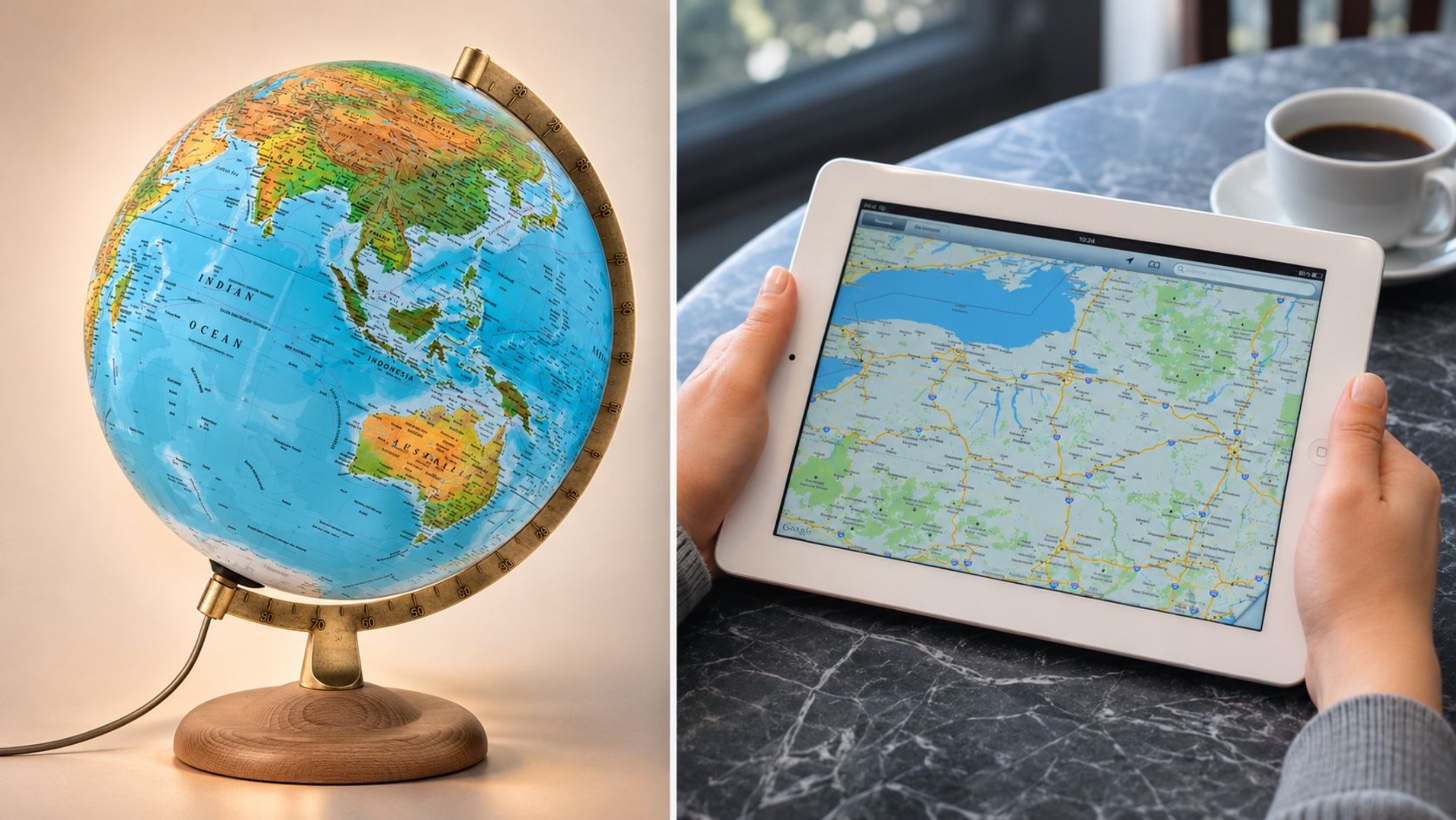
Is it better to teach geography with an old-school globe or Google Maps? 🌍
Personally, I have a physical globe at home. It's how I show my 5-year-old where countries are, where we live, and where I'm traveling next.
I love Google Maps too, and I'm sure we'll use it together as he gets older but right now, I think the globe works better.
Sometimes the best tool for learning isn't the most technologically advanced one.
I think schools are starting to ask themselves the same question. I wrote an article where you'll find 5 emerging trends in Ed Tech and what this could mean for schools.
For years, we've been putting more screens in classrooms, assuming that more technology would lead to better learning. Now schools are pulling phones out while simultaneously trying to figure out how to introduce AI.
I had a fascinating conversation about this at EdTech Week with Catherine Price, New York Times bestselling author of How to Break Up With Your Phone, and Rachel Hanebutt, PhD, a developmental psychologist at Georgetown University who leads its Teens & Screens Co-Lab.
One thing Catherine said really stuck with me. A new drug needs years of testing before it reaches the public, yet we're introducing powerful technologies to children with very little testing or accountability.
Rachel shared a story that I found particularly interesting. A teenager asked her mom for help with math homework. Her mom immediately opened ChatGPT to find the answer. But the teenager could have done that herself. What she actually wanted was her mom.
I think this illustrates something important about how we learn. The process of figuring things out, struggling with a problem, or working through it with another person is often where the learning happens.
I'm optimistic about what technology can make possible in education but I also think we're only beginning to understand what happens when we make it effortless for kids to skip those experiences.
What's encouraging to me is that young people are already questioning their own relationship with technology. At Opal, roughly 75% of our users are under 25, and many come to us on their own because they want more control over their attention.
The next few years will bring some important changes in how schools approach technology. We'll need to get much more thoughtful about which tools genuinely help students learn, at what ages, and how we teach them to use those tools independently.
I wrote an article exploring five emerging trends in education technology, inspired by our conversation at EdTech Week, and what they could mean for schools.
If you're an educator or parent, let me know what you think!